
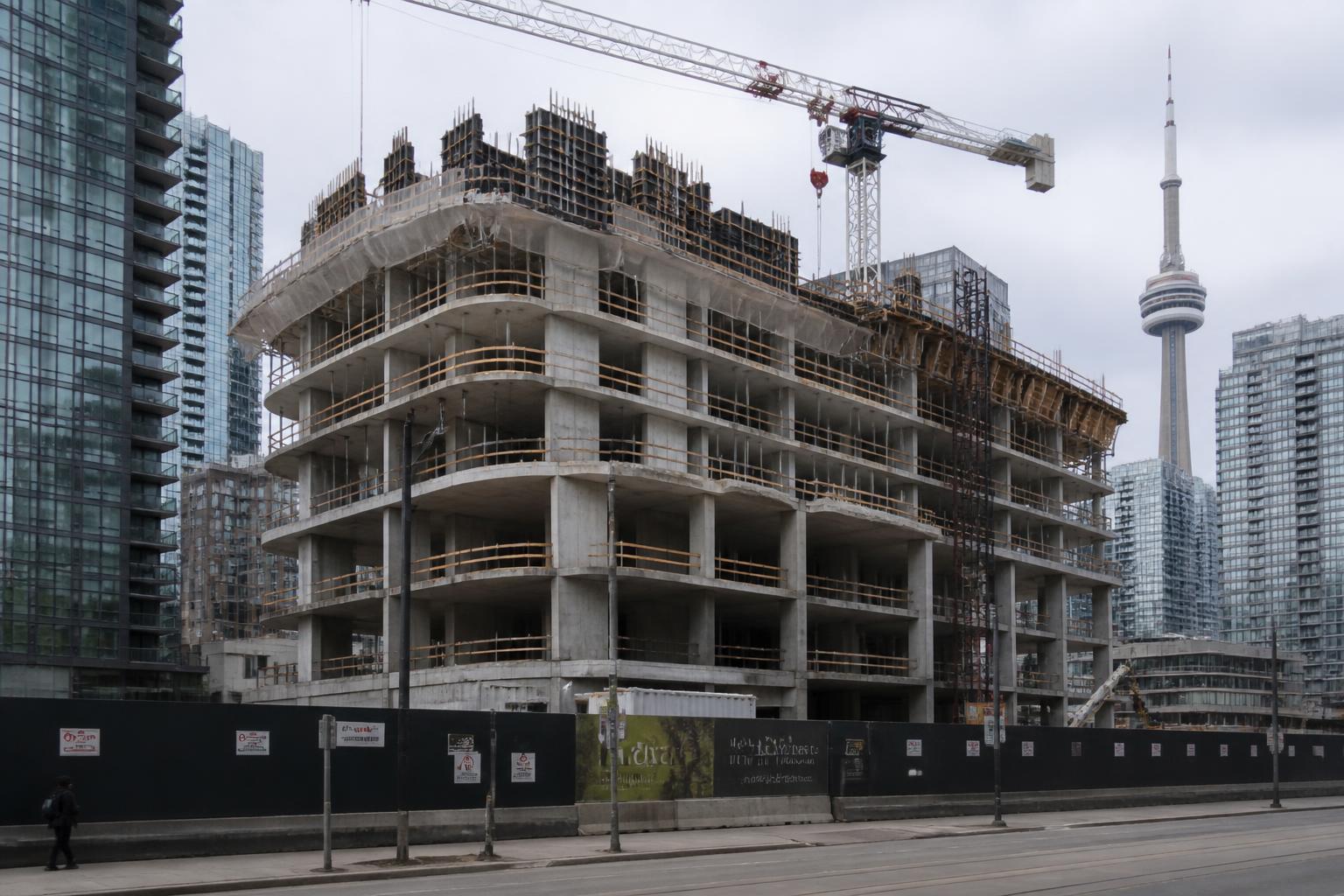
Hotel Construction Financing
Ground-up hotel builds, franchisor PIP obligations, renovations, room additions, and adaptive conversions - financed on draw schedules with a clear take-out plan into permanent debt once the project is complete and stabilized.
All financing is subject to lender approval, appraisal, and project qualification.
Capital that follows the build, not a single lump sum.
Hotel construction and PIP financing is drawn in stages against a cost consultant's confirmation that work is complete to a stated percentage, with statutory holdbacks retained until lien periods expire. Sizing is based on total project cost - typically 60-70% loan-to-cost - rather than the finished value alone, and franchise commitment, sponsor experience, and a credible take-out plan all factor into what a lender will advance.
Whether the project is a ground-up build, a franchisor-mandated PIP at acquisition or re-flag, or converting an existing building into a hotel, the underwriting question is the same: what will this asset's NOI and DSCR look like once it opens and stabilizes, and does the completed-project appraisal support the debt.
Ground-up construction
New-build hotels from site acquisition through opening, financed on draw schedules tied to construction milestones.
PIP financing
Franchisor-mandated property improvement plans at acquisition, re-flag, or brand refresh, costed and drawn against the PIP scope.
Renovations & room additions
Guest room refreshes, lobby and amenity renovations, and room count expansions on an operating property.
Adaptive conversions
Converting an existing office, residential, or commercial building into a hotel, underwritten on the completed-hotel proforma.
Franchise re-flag projects
Financing the transition from one flag to another, or from independent to flagged, including brand-required capital work.
Take-out to permanent financing
Construction and PIP facilities structured with a clear, pre-planned exit into a term hotel mortgage once stabilized.
From scope to a funded, drawn facility.
1. Scope and budget
Construction drawings or PIP scope, a hard-cost budget, contractor and cost consultant identified, and a completion timeline.
2. Lender and structure
We match the project to construction lenders willing to fund the loan-to-cost and timeline you need, including a take-out plan.
3. Draw schedule set
The lender and cost consultant agree on draw milestones, holdback percentages, and reporting requirements before the first advance.
4. Funding through completion
Draws are advanced as work is verified. We track holdbacks, lien periods, and the transition to a permanent take-out mortgage.
Construction & PIP financing FAQ.
What is hotel construction financing?
Draw-based debt that funds a ground-up hotel build, a major renovation, a room addition, or an adaptive conversion of an existing building into a hotel. Funds are advanced in stages tied to a construction schedule and verified by a cost consultant, with a portion held back until lien and deficiency periods clear.
What is a PIP and why does it need its own financing?
A property improvement plan (PIP) is the scope of renovation work a franchisor requires to bring a property up to brand standard, whether at acquisition, re-flag, or a periodic refresh. PIPs are usually costed in detail by the franchisor and financed as a draw facility, often alongside or layered onto the permanent mortgage.
How do draw schedules work?
The lender advances funds in stages - site work, foundation, framing, mechanical, finishing - as a third-party cost consultant confirms work is complete to the stated percentage. Holdbacks required under Ontario's construction lien legislation are retained from each draw and released after the applicable lien period.
What loan-to-cost is available for hotel construction?
Construction facilities are typically sized against total project cost rather than stabilized value, commonly in the 60-70% loan-to-cost range depending on the sponsor's experience, the franchise commitment, and pre-opening bookings or management contract in place.
Do I need a take-out lender lined up before construction starts?
Most construction lenders want a credible take-out plan - either a commitment from a permanent lender or a clear underwriting path to refinance once the hotel is stabilized. We arrange both pieces together so the construction facility rolls smoothly into permanent financing.
Can an independent hotel get construction financing, or only flagged builds?
Both, though flagged builds are generally easier to finance because the franchise agreement demonstrates demand and operating standards to the lender. Independent and boutique construction and conversion projects are financeable through secondary institutional and private construction lenders, usually at a higher cost of capital.
How long does hotel construction financing take to arrange?
Ground-up construction facilities typically take four to eight weeks to underwrite given the added complexity of cost review, appraisal on an as-complete basis, and environmental and zoning due diligence. PIP and renovation draw facilities on an existing operating asset can move faster.
Send the scope, the budget, and the timeline.
Whether it's a ground-up build, a PIP, or a conversion, we'll come back with a realistic loan-to-cost, a draw structure, and which lenders fit your timeline.
Text (647) 342-1355 for the fastest reply, or call the same number.
Related hotel financing pages
Hotel mortgages Toronto
The full picture of lender tiers, DSCR, and terms across hotel financing.
Hotel bridge financing
Short-term capital while a construction or PIP project reaches completion.
Boutique hotel financing
Financing for independent and lifestyle conversion projects.
Hotel construction financing guide
Draw schedules, cost consultants, and holdbacks explained in detail.
Hotel DSCR underwriting
How lenders size the take-out mortgage once the project stabilizes.
Hotel refinancing Toronto
Rolling a construction or PIP facility into permanent debt.