
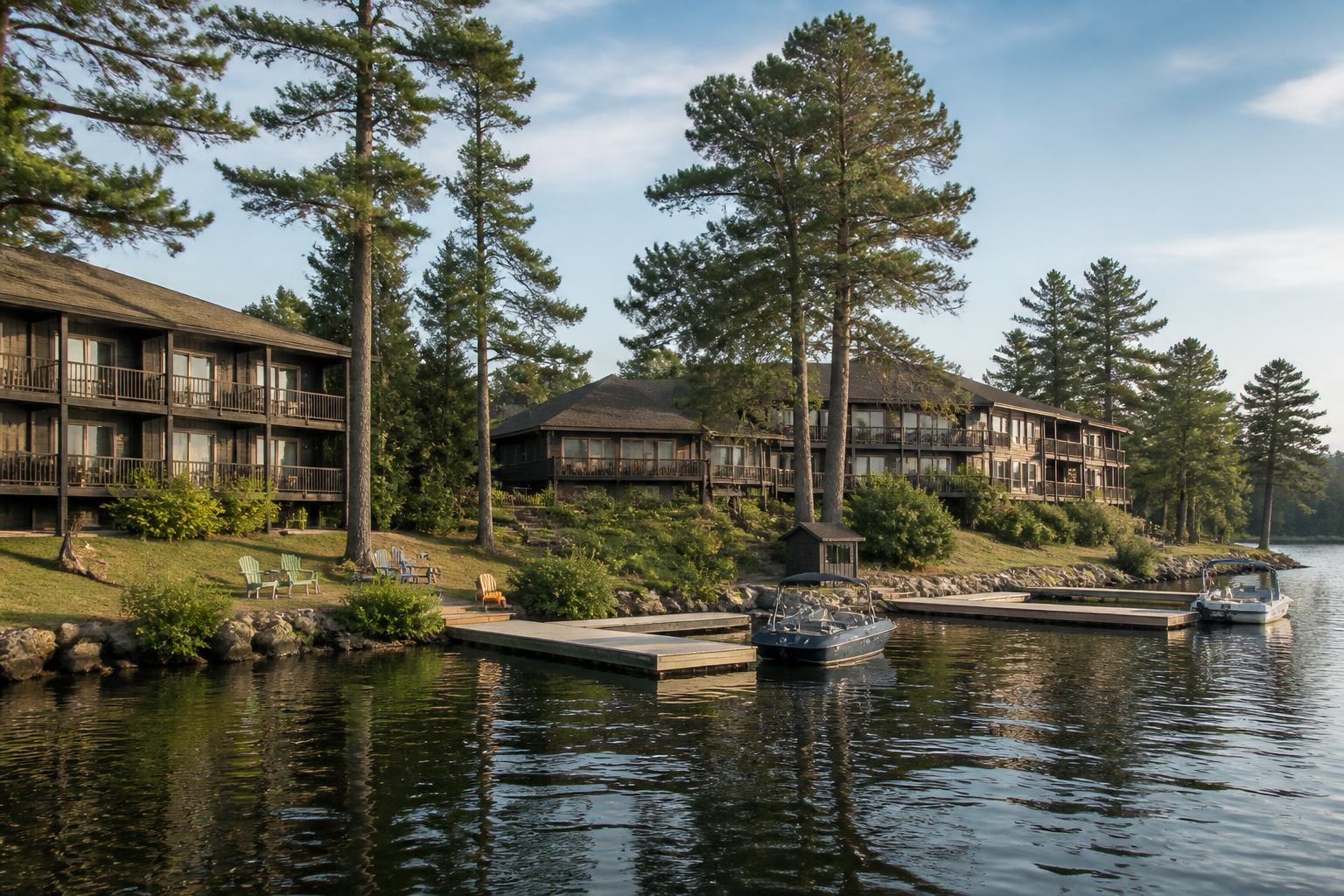
Buy a Hotel in Toronto
What you can pay for a hotel is decided by what a lender will advance against its operating performance. We pre-qualify you on the actual property before you make an offer - modelling debt service coverage, loan-to-value, the equity you truly need, and any franchise improvement plan - then place the file across more than 50 bank, credit union, and private lenders.
Meshesha Robel, Mortgage Agent Level 2 - FSRA M15001135, Mortgage Alliance brokerage 10530. All financing is subject to lender approval, appraisal, and operator/property qualification.
Buyers lose hotel deals on financing, not on price.
The common failure pattern is predictable: a buyer agrees to a price based on the seller's stated net operating income, puts up a deposit, and then discovers that the lender won't credit a meaningful portion of that income, that the going-concern appraisal separates real estate from business value, that a franchise improvement plan of a million dollars or more lands on their side of the closing, and that the financing condition period was never long enough for a hospitality underwriting file. The deposit is at risk and the leverage in the negotiation is gone.
The fix is unglamorous: underwrite the property the way a lender will, before you commit. That means normalizing the statements yourself, applying a market management fee and an FF&E reserve, testing the result against a realistic coverage requirement, confirming the flag and management structure, and getting the PIP scope in writing. It typically takes days, not weeks, and it changes both what you offer and how you structure the conditions.
Equity you'll actually need
Typically 35% to 45% of price on institutional debt, plus closing costs, working capital, and any improvement plan. We model the real number before you write an offer.
Pre-qualification on the property
Send the seller's statements and asking price and we'll tell you what lenders will advance - so your offer and financing condition are grounded in lender math.
Purchase plus PIP in one structure
Where a franchise improvement plan is coming, financing it alongside the acquisition is far cheaper than funding it out of pocket afterward.
Flagged or independent
Some lenders require a recognized brand; others are comfortable with a well-run independent. Knowing which is which is what keeps you from a wasted application.
First-time hotel buyers
Third-party management, a franchise agreement, or an experienced partner can substitute for operating history - with lower leverage and more scrutiny.
Straight answers, disclosed fees
If the deal needs more equity or a different lender tier, you'll hear it early. All costs disclosed in writing before you commit.
How much equity a $12M Toronto hotel purchase really needs.
The lender's math
A 120-room select-service hotel is offered at $12M. Statements show $1.05M of NOI; after a 4% management fee and a 4% FF&E reserve the lender underwrites roughly $900,000. At a 1.40x debt service coverage requirement that supports about $643,000 of annual debt service - roughly $7.9M of debt at illustrative 6.5% pricing on a 20-year amortization. Loan-to-value at 60% of a $12M appraisal caps it at $7.2M, so the LTV test governs.
What the buyer brings
$7.2M of first-mortgage debt leaves $4.8M of equity on price, plus land transfer tax, legal, appraisal and environmental costs, and working capital - call it $5.3M to $5.5M all in. If the franchisor requires a $1.5M improvement plan, that has to be funded too, either as an add-on facility underwritten on stabilized performance or from equity. A vendor take-back of $1M behind the first mortgage, where the lender permits it, is often what closes the gap.
Illustrative only. Actual NOI treatment, coverage requirements, appraised values, rates, reserves, and loan amounts vary by lender, property, and appraisal. Nothing here is a rate or approval guarantee.
From pre-qualification to funding.
- 01
Pre-qualification
Your equity, experience, and target property type set the realistic lender tier, leverage, and pricing before you spend money on anything.
- 02
Underwrite the target
We normalize the seller's statements, apply market management and reserve assumptions, and model the debt the property supports at each lender tier.
- 03
Offer and conditions
The financing condition period is negotiated against the actual timeline the lender tier requires - not a number picked out of the air.
- 04
Placement and term sheets
The file goes to the lenders whose hospitality appetite matches the asset. You compare competing structures on total cost, not headline rate.
- 05
Appraisal, environmental, franchise consent
Going-concern appraisal, environmental review, and brand approval are coordinated so the closing date holds.
- 06
Funding and beyond
We stay on the file to funding and check in ahead of renewal, refinance, or the improvement plan you'll fund next.
Related financing and reading
Hotel financing Toronto
Acquisition debt for flagged and independent hotels across Toronto and the GTA.
Buying a hotel: full guide
A step-by-step walkthrough from letter of intent through funding.
DSCR underwriting guide
The coverage math that decides how much you can actually borrow.
Bridge & private financing
Closing on a tight timeline or acquiring a property that needs stabilizing first.
Construction & PIP financing
Funding a franchise-mandated improvement plan alongside the purchase.
Selling a hotel in Toronto
The other side of the table - useful context when negotiating price.
Buying a hotel in Toronto: FAQ.
How much down payment do I need to buy a hotel in Toronto?
Institutional hotel lenders typically advance around 55% to 65% of appraised value, so plan on 35% to 45% of the purchase price in equity, plus closing costs, working capital, and any franchise or improvement-plan obligations. A recognized flag, strong operating history, and an experienced owner-operator can push leverage toward the top of that range; an unflagged property, a transitional year, or a first-time hotel buyer usually sits at the bottom. Vendor take-back financing or a participating equity partner can bridge part of the gap.
How do lenders decide how much I can borrow on a hotel purchase?
Two tests, and the lower one wins. First, debt service coverage: the lender normalizes the property's net operating income - after a market management fee and an FF&E reserve - and divides it by a required coverage ratio, commonly 1.35x to 1.50x on hospitality, to get maximum annual debt service, which converts to a maximum loan. Second, loan-to-value against a going-concern appraisal. Your purchase price is irrelevant to the lender except as a sanity check; the operating statements set the loan.
Can I buy a hotel with no hotel experience?
It's harder but it's done regularly. Lenders want to see either direct hospitality operating experience or a credible substitute: a qualified third-party management company under contract, a franchise agreement with a recognized brand, a partner with a track record, or relevant experience in an adjacent operating business. Expect lower leverage, a stronger covenant requirement, and more scrutiny of your business plan. We'll tell you upfront which lenders will look at a first-time buyer.
What is a PIP and why does it matter before I buy?
A property improvement plan is the scope of renovation a franchisor requires when a hotel changes hands or renews its licence - guest rooms, lobby, bathrooms, technology, and brand standards. It can run into the millions and it is your obligation, not the seller's, once you close. Get the PIP scope in writing during due diligence and finance it as part of the transaction rather than discovering it after closing. Many lenders will advance against a purchase plus PIP together if the plan is documented.
How long does hotel purchase financing take to close?
Six to ten weeks is realistic on a conventional institutional loan once the going-concern appraisal, environmental review, and financial underwriting are underway. Franchise consent or a re-flag process can add time. Credit unions and secondary institutional lenders often move faster; bridge and private lenders can close in one to three weeks when the timeline is the binding constraint. Build the real timeline into your agreement rather than an optimistic one.
What should I ask for during due diligence?
Two to three years of operating statements plus year-to-date, monthly occupancy, ADR and RevPAR detail, a STR or comparable market report if available, the franchise agreement and any PIP letter, the management agreement, staffing and payroll records, capital expenditure history, property tax and utility bills, any environmental reports, and outstanding permits or work orders. Lenders will ask for most of it anyway - getting it early means you find problems while you can still renegotiate.
Should the purchase be structured as a share sale or an asset sale?
It affects the financing materially - lenders generally prefer an asset purchase because the security and liabilities are cleaner, while a share sale can carry historical tax, employment, and litigation exposure. There are legitimate reasons to do either, often tax-driven. Decide it with your accountant and lawyer early, because restructuring after a lender has issued a commitment usually means starting the credit process over.
Can you pre-qualify me before I make an offer?
Yes, and it's the most useful thing we do. Give us the property's operating statements, the asking price, and your available equity and experience, and we'll model what lenders will realistically advance and at what pricing. That tells you what to offer, how much equity you truly need, and which financing condition period to negotiate - before you're committed. No credit pull to start, and fees are disclosed in writing before you commit.
Know your number before you make the offer.
Send the property's operating statements, the asking price, and a note on your equity and experience. We'll come back with the debt the property supports, the equity you'd need, realistic pricing by lender tier, and the financing condition period to negotiate. No credit pull to start.
Related services across our network
Commercial real estate, valuation, and business equity specialists we work alongside on hotel acquisitions.
- Toronto commercial real estate insightsMarket coverage on GTA multi-residential, retail, office, and industrial properties - a good starting point before arranging commercial mortgage financing.
- Toronto home valuation serviceFree property valuations for Toronto and GTA homeowners - useful before a refinance, equity take-out, or renewal so you know the value your lender will be working from.
- Toronto business consulting and brokerageConsulting and brokerage support for GTA business owners buying, selling, or scaling a company - often paired with commercial and acquisition financing.